Wednesday, December 4, 2019
A World We Dare to Imagine: Part 3, The American Tapestry
The American Tapestry, a Cultural Film Foundation—Bringing Diverse Stories to Hollywood
Our mission is to provide minority filmmakers with the tools that they need to find their own unique voice and help them through every step of getting their films made. We provide grants, mentorships, and industry partnerships so that these minority artists can tell their unique stories in their own way.
Currently, movies are developed with little regard to the deep emotional and cultural effects that they have upon the audiences that watch them. What people don't realize is that behind every movie is a collection of artists who have constructed that story from pieces of their unique experiences. They put their soul into every frame of the film. Ultimately this reflection of the artist is what the audience sees and connects with because it reflects their own experiences and struggles. However, when the only artists that are hired all have the same cultural backgrounds and experiences, they all start to tell the same story over and over again. Then the minorities in the audience see the film and don’t see their experiences reflected which loses potential customers, and more importantly it causes negative cultural and psychological effects.
The main problem the current Hollywood system is that even though there is an increased awareness of the lack of diversity, there is a continued lack of systems in place to help foster and nurture this diversity at the source. Recently, Hollywood executives have seen the attendance numbers beginning to negatively shift due to push back from neglected groups and have started aggressively pursuing diversity. As a result, they have failed to build and foster the voice of minority filmmakers, instead opting to set diversity hiring quotas. They rush to shoehorn minority filmmakers into stale ready-made projects, rather than giving them the opportunities and training to tell the new stories that they long to share.
The United States' diversity is what makes it so special, yet the cultures of many minorities continue to be neglected within Hollywood, and because of this their stories are lost and unknown within our culture. The American Dream is like a tapestry that all Americans weave together. The American Tapestry works to give minority filmmakers the needles and thread that they need to weave their unique stories into the fabric in order to make the tapestry finally represent the minorities that have been neglected for so long. The American Tapestry creates programs that take promising young minority filmmakers, teach them how to find their own unique voice, give them the funding that they need to produce their projects, and partner them with studios for distribution. so that every culture within the United States can finally see itself and its stories reflected within the film industry.

Monday, November 25, 2019
World We Dare to Imagine: Part 1
It took me quite a lot of thought to figure out how
I might be able to use my education to make a difference in the world. When
regular people think of the entertainment industry, they usually think of it as
merely entertainment, or just something to do with an empty hour or two. Many
of the business people in the entertainment industry think of movies only as a
commodity to be sold and think of the artists that make them as
obstacles to be navigated around or cajoled into submission. Movies are distributed
with little regard to the profound emotional and cultural effects that they
have upon the audiences that watch them, the audience is reduced to rows of theater seats filled with dollar signs. But movies are so much more than that! Like it or not, movies
are a form of art, and they carry the same impact as all other art forms.
I believe that art is about:
the artist taking a piece of their soul, creating a work of art that reflects
that piece of their soul, and then every individual member of the audience
seeing their own soul reflected in that work and having that part of themselves
be revealed. What people don't realize is that behind every movie is a
collection of artists who have constructed that story from pieces of their unique
experiences. Whether they want to or not, they put their soul into every frame
of the film. Ultimately this reflection of the artist’s soul is what the
audience sees and connects with because it reflects their own experiences and
struggles. This connection is what makes film-making such a beautiful art form.
But when the only artists that are hired to make movies all have the
same experiences and continue to tell the same story over and over again, minorities
in the audience see the film and don’t see their soul reflected. It’s a
crushing experience for them. It feels like they don’t belong and are all alone
in their struggle. And that is why diversity within the film industry is so vital.
I feel like I should disclose that I am a cisgender, straight, white, male. Some
people might say that I have no place to talk about diversity and inclusion because
of these facts, but I believe that this issue is much larger than me, and that no matter what we're
all going to have to work together to figure out a way to solve these issues regardless
of sexual identity, gender identity, or race.
I think the main problem I've noticed with the
current Hollywood system is that even though there is an increased awareness of
the lack of diversity in Hollywood, I feel that there is a continued lack of
systems in place to help foster and nurture this diversity at the source. Very recently, Hollywood executives have seen the attendance numbers
beginning to negatively shift due to push back from neglected groups and have
started aggressively pursuing diversity for all the wrong reasons. As a result,
they have failed to build and foster the voice of minority filmmakers,
instead opting to set diversity hiring quotas and shoehorn minority filmmakers
into stale ready-made projects, rather than giving them the opportunities and
training to tell the new stories that they long to share.
The United
States' diversity is what makes it so special, yet many cultures continue to be
neglected within Hollywood, and because of this their stories are lost and unknown within our
culture. The American Dream is like a tapestry that all Americans weave
together. My dream is to find a way to give everyone the needles and thread
that they need to weave their unique stories into the fabric to make the
tapestry finally reflect the diversity that is inherent in our population within our national identity.
Ultimately, what I’d like to do is make a program that takes young
minority filmmakers and teaches them how to find their own unique voice, and
then gives them the funding that they need to tell their own unique stories so
that every culture within the United States can see itself and its stories reflected within our
culture.
Sunday, November 10, 2019
Book 2: Post 2
Have you ever been to the Netherlands? If you have, you know that it's pretty common to see towns where everyone living there was either born there, or has come from another small village exactly like it. And as I looked around at all of those people who looked like carbon copies of one another, I thought of how much I would hate to live in a place like that. The diversity of America is what makes our country special and unites us, and at the same time, it's our cultural differences that cause division and tension.
The book American Like Me: Reflections on Life Between Cultures by America Ferrera explores both the unifying and dividing properties of culture and how they weave together to form the fabric of American Culture. Ferrera explores this idea through a collection of autobiographical essays by successful first-generation Americans. It dissects the idea of the American Dream, and reveals that the beautiful thing about American culture is that pretty much everybody has come from somewhere else. This diversity is reflected in the various writing styles of the authors. Although every chapter is authored by a different first generation American immigrant, the chapters are thematically linked in their exploration of the American identity and the switching of narratives and styles every chapter is always refreshing.
American Like Me: Reflections on Life Between Cultures was an engaging read that captivated me from start to finish. It helped to reshape the way that I think about what it means to be an American and it does a great job of delivering its message that the American Dream isn’t dead, and it’s always the same regardless of gender, race, or economic background. Ultimately, the book asks us all to find a way to make the American Dream inclusive and accessible for everyone so that every culture can weave their own unique fabrics together to create the American Tapestry and finally reflect the diversity in our culture that is inherent in our population.
Sunday, November 3, 2019
Two Great Original Movie Scores
Two Great Original Movie Scores:
If a composer is doing a good job at composing an original score for a movie, you'll hardly ever notice that he or she is there. You will only be left with a feeling. Composers are usually never given proper recognition for their work and the lasting effect that an original piece of music composed explicitly for that scene can have on the audience. Since original scores are slowly fading away in favor of soundtracks in modern cinema, I'm worried that these special moments where the music blends perfectly with the cinematography and the story will be wiped away completely! So that's why I wanted to take a moment to highlight 2 of my favorite movie scores which both use very different techniques to achieve a similar effect and examine how the score helps to elevate the scenes and instill a profound feeling in the audience. That way maybe you can learn to appreciate the movie scores within your favorite films!French Connection [1971] (End Title by Don Ellis)

Doyle and his partner chase Charnier down on foot and corner him in a derelict warehouse. Their footsteps echo against the cold pavement as they move down the shadowy hallways, creating a tense atmosphere. Both detectives are on edge with their guns drawn when a shadow suddenly moves in the darkness. Doyle opens fire, and the figure slumps to the floor. But as the men approach, they realize that it is not Charnier who lays lifeless on the floor, but a fellow detective. His partner runs to check the dead cop's pulse, but Doyle only continues scanning the darkness as he reloads his revolver. When his partner turns to confront Doyle, Doyle only says "He's here, I'm gonna get him" as he stares off into the darkness, his obsession consuming him.
And then the End Title begins to play, an eerie piece expertly designed by Don Ellis. The screeching strings and blues trumpets make your skin crawl and truly underscore the absence of justice and convey the themes of hopelessness and disillusionment which are prevalent throughout the film. As the End Titles play, the camera shows Doyle running off, chasing another shadow further into the darkness. From the shadows we hear Doyle fire another blind shot in the dark as screen fades to black and the end titles reveal that Charnier was never caught, and is believed to be living in France, where Doyle can never bring him to justice.
Sicario [2015] (The Beast by Jóhann Jóhannsson)

The task force must travel into Juarez, Mexico to assist in the extradition of a high ranking member of the cartel in order to bring him back to the U.S. to question him. Matt and his army operators gear up for open combat with vests, automatic weapons, and full body armor, but Mercer is horribly unprepared with only her sidearm and a vest. As they go over the planned route of the convoy, Matt warns Mercer that the Cartel could strike at any time, and that in Juarez many of the cops are on the Cartel's payroll so no-one can be trusted. And with that, the convoy rolls out over the desert. Everyone is on edge with their weapons at the ready because the cartel could strike at any moment. Every passing car, windowsill, and even the cops driving alongside them are potential threats.
As the city of Juarez comes into view, The Beast begins to play very quietly at first. But then as the city approaches and the looming firefight grows closer and closer, the beat grows louder and louder, starting out as mainly an ominous bass line with a quiet percussive loop which transforms slowly into a very aggressive crescendo signalling Mercer's impending doom. The percussion beats out the rhythm of a war drum, and is mixed with the slowed down mechanical "ca-chunking" of helicopter blades. Jóhann succeeds at creating the sound of a looming threat with a theme that rivals the iconic Jaws. The repetitive "mechanical" motif within The Beast implies that a mechanism that is large, complex, and remorseless is awaiting Mercer, and it will grind her up with brutal efficiency if she isn't careful. A prophecy that ultimately becomes true in the way she least expected, as Mercer begins to question the task force's illegal and unethical methods, realizing that she is truly powerless to stop them and her life may be in danger.
Monday, October 28, 2019
Book Two: Post One "American Like Me" by America Ferrera
I'm excited to be reading American Like Me, a collection
of personal essays about the American identity written by accomplished Americans
about their struggles with their American identity. This anthology has been thoughtfully
compiled by America Ferrera. I have always been a big fan of her work which is one
of the main reasons that I chose this book. Her acting is fantastic, and her I
deeply concur with her advocacy for better depictions of underrepresented groups
in film and TV. America makes the point in her introduction that being American
is about the blending of cultures, and America’s story will never be completed
until everyone can see their story represented in the shared culture. This
section made me think of an ideal America as a giant complex and beautiful tapestry
that all Americans weave together, an image that deeply resonates with me.
America’s commentary and the stories that I have read so far
have really re-shaped my viewpoints about what it means to be an American and opened
my eyes to the privilege that I hold. Although I’ve always struggled to connect
with my Irish identity (even though I am a citizen there) and discover more of
that side of my story, I’ve never even questioned whether or not I was truly an
American. I have never had to experience the struggle of attempting to balance
multiple cultural ideologies at the same time, like how America was forced to sacrifice
aspects of her Latina identity in order to fit in with her white friends, and I
can’t imagine how hard it must have been dealing with those cultural identity issues
at the same time as you’re being forced to grow up and deal with the angst of middle
school. I barely made it out of Middle School alive without the added stress of
having to worry about whether people were going to interrogate me in school
about whether I was really an American or not.
The story of Reshma Saujani. an Indian-American woman who is
the founder and CEO of Girls Who Code,
made me reconsider how privileged I was growing up. She had trouble fitting in
because of her Indian name, and lied about it in order to make things easier
and fit in. She talks in her essay about how as a child she was crushed every
time she would see one of those souvenir keychain racks at a gift shop but couldn’t
find her name because it was ‘too exotic’. She took it as a sign that she didn’t
belong in America, and she would never fit in. I was always lucky as a kid because
Ryan is a super common name. I even have a small collection of shoddy souvenir name
keychains to prove it. I was never ashamed of my name and I didn’t have to face
the pain of feeling like I didn’t fit in like Reshma did. It’s strange how
sometimes the smallest stories can be the ones that connect the most, and this
book has used a collection of tiny anecdotes to make me better realize what it’s
like to struggle with one’s identity.
Wednesday, October 16, 2019
AMDP Proposal: Neste Corporation
TO: Clark Hansen, CEO, Anima Mundi
Development Partners
FROM: Ryan Traynor, Investment
Manager R&D
DATE: October 18th, 2019
SUBJECT: Neste Corporation
Investment Opportunity
You asked me to recommend a business or social enterprise
that is committing to corporate social responsibility, supporting the
principles of the triple bottom line, reducing their carbon footprint, and
developing social enterprise. After my extensive research, I recommend the Neste
Corporation, from Espoo, Finland. It produces, refines, and markets oil
products, offers engineering services, and operates internationally. In this
memo, you will find:
•
The Anima Mundi Development Partners Investment Guidelines
• A General Overview of the Core Values and Background of Neste
• Appraisals of the Future of Neste Corporation from Industry Sources
• My Personal Recommendation for Investing in Neste Corporation
• A General Overview of the Core Values and Background of Neste
• Appraisals of the Future of Neste Corporation from Industry Sources
• My Personal Recommendation for Investing in Neste Corporation
The AMDP Investment Guidelines
Before
evaluating Neste Corporation’s investment potential, let’s go over the values
that AMDP looks for in potential investment partners:
·
Triple Bottom Line (TBL)
o In the past, business leaders were only concerned
with one bottom line: their profits. But in today’s evolving world, we must
expand “the traditional accounting framework to include two other performance
areas: the social and environmental impacts of a company. These three bottom
lines are often referred to as the three P’s: people, planet, and profit.”
(University of Wisconsin 1) This framework establishes a groundwork so that businesses
can begin to develop positive interactions with their staff, their publics, and
the environment.
·
Corporate Social
Responsibility (CSR)
o CSR guidelines exist to “hold a company socially
accountable—to itself, its stakeholders, and the public” (Chen 1) This
principle makes companies responsible for the impact that their actions have on
their surrounding communities, whether they bring good or bad consequences.
·
Social Enterprise
o The Social Enterprise Alliance defines a Social
Enterprise as: “an organization that addresses an unmet need or solves a social
or environmental problem through a market driven approach”. (What is a Social
Enterprise? 1) This type of organization centers its business model around
an important social issue.
·
Carbon Footprint
o This is defined as “the amount of greenhouse gases
and specifically carbon dioxide emitted by something (such as a person's
activities or a product's manufacture and transport) during a given period”
(Merriam-Webster 1) This carbon dioxide is primarily released through the
burning of fossil fuels.
General Overview of Neste Corporation
Background
Neste
is an oil and gas company that was founded in 1948 as the state petrol company
of Finland to develop refined fuels. They operate in 14 countries and employ over
5,000 people, currently leading the market in renewable diesel production (Marketline
Profile). It wasn’t always at the top of the sustainable fuel industry however,
and it took a considerable amount of effort for them to make it there: “Until very
recently it was a fossil fuel company refining oil to be burned and creating
greenhouse gas emissions in the process, says Heaps. But the firm shifted, and
now more than 50% of Neste’s investments are into the development of products
like renewable biofuels. As it stands, 25% of the company’s revenue comes from
biofuel refining, and it’s aiming to increase that figure in the coming years.”
(Strauss 3) This remarkable transition in such a short period of time shows the
incredible potential that Neste has to further develop over the coming years
and corner the international sustainable fuel market. “Neste’s biofuel business
represents 50% of its profits, says Heaps. ‘So, they’re earning a higher margin
on their biofuels business—even though it’s only a quarter of their revenue,
it’s half their profits. Neste shareholders aren’t bemoaning the
company’s shift, as share prices have risen 300% in the past five years” (Strauss
3) Clearly, their new approach of shifting their target demographics and corporate
image to a sustainable model is working marvelously, as indicated by the 300%
increase in stock price. Although only 25% of their revenue comes from
developing biofuel, it represents 50% of their profits, showing that their
continued expansion into this market and away from their non-sustainable fuel
development will only result in further growth of the company.
Core Values
Sustainability is at the heart of Neste’s business model,
making Neste a Social Enterprise focused on filling the demand for eco-friendly
oil products. Seeing the lack of sustainable fuel products available and
understanding that their CSR makes them responsible for the carbon emissions of
the products that they sell, Neste invested heavily in developing alternative biofuels
and sustainable oil product development in order to make a positive impact. Their
central claim is that: “Everything we do at Neste serves one purpose: to create
a healthier planet for our children. Over the past ten years, Neste has
transformed from a regional oil refining company into a global leader in
renewable fuels and one of the most sustainable companies in the world. Our
purpose pushes us forward to search for new ways to reduce the amount of carbon
released into the atmosphere, and to innovate circular solutions to reuse
carbon again and again. Our aim is to become a global leader in renewable and
circular solutions.” (“Creating a Healthier Planet for Our Children” 1) This focus on filling the gap in renewability and
circular solutions leads Neste to become an innovator on ways to reduce and
reuse waste as well: “Our goal is to do more with less. That is why we
continuously are searching for new renewable raw materials, such as waste and
residues.” (“Sustainability” 1) This commitment to the environment and the
company’s various publics shows that Neste is committed to the principals of TBL.
This approach has worked for Neste for the highly acclaimed Forbes business magazine
ranked Neste #3 on its list of “The Most Sustainable Companies In 2019”: an annual list of the most
sustainable companies from any industry worldwide. Their commitment to improving the earth for future
generations is very unique in the oil and gas industry and has brought the
company much praise.
Growth and
Future
GlobalData’s
SWOT analysis of Neste lists focused R&D Activities as one of the company’s
main strengths citing a focus on “broadening of the product portfolio,
renewable aviation fuel, low sulfur marine fuels, and new bio based plastics
and chemicals” (GlobalData 24) They have a huge head start on the rest of the
industry when it comes to research and development of new sustainable products.
GlobalData points out that in 2017 Neste spent 44 million euros on R&D
which is only 0.3% of its revenue yet managed to grow its total revenues by a
whopping 7.3% from the previous year, which is the mark of a very successful R&D
department. This focus on new product development will give them a significant
edge when other corporations attempt to muscle into the renewable diesel market.
The SWOT analysis lists Neste as the world’s largest producer of renewable diesel,
stating: “Its share of the world’s total renewable diesel production capacity
is approximately 60%” (GlobalData 24) This lead gives them a huge jumpstart on
new competitors entering the industry. In the future, Neste intends to reduce
its carbon footprint even further. The company’s website states that: “We also
aim at managing and minimizing on the emissions from our production. In 2019,
we set ourselves two new ambitious climate targets: To reduce our customers’
greenhouse gas emissions with its renewable and circular solutions by at least
20 million tons CO2eq annually by 2030, and to reduce the carbon footprint of
Neste’s production ahead of EU’s climate and energy targets” (Neste Impact 1) These very ambitious goals
show that Neste is not afraid to make these sorts of promises, and continually
delivers year after year. Neste’s promises of reducing carbon emissions aren’t mandatory
requirements by the government, and their ambitious commitment to reducing their
carbon footprint shows that the value of corporate social responsibility is deeply
engrained into the company’s culture.
Recommendation
I
understand that past negligence from other companies in the oil industry may make
it hard to believe that an oil refinery could ever possibly practice
sustainable business at all, much less become one of Forbes’ “Most Sustainable Companies
in 2019”. But over the course of my research I have learned that Neste not only
applies its rigorous sustainable values to its own operations but includes them
in the products and services they provide and looks for the same values in the
people they decide to partner with. As countries are beginning to recognize the
importance of reducing greenhouse gas emissions and governmental regulations
are becoming tighter within the industry, Neste doesn’t resist these changes
and regulations like the other oil companies but rises to the challenge and exceeds
expectations time after time. Neste has proven itself to be a Social Enterprise
with a reduced carbon footprint with a strong commitment to TBL and CSR. For these
reasons, I highly recommend investing in Neste. They are a household name in
the sustainable business sector and have turned around their entire business
model by shifting from a regional oil refinery to an international leader in
pioneering renewable sources of fuel.
Works
Cited
“Carbon Footprint.” Merriam-Webster
Dictionary, Merriam-Webster,
www.merriam-webster.com/dictionary/carbon%20footprint.
Chen, James. “Corporate Social
Responsibility (CSR).” Investopedia, Investopedia, 12 Mar. 2019,
www.investopedia.com/terms/c/corp-social-responsibility.asp.
“Creating
a Healthier Planet for Our Children.” Neste
Worldwide, 6 Sept. 2019, www.neste.com/corporate-info/who-we-are/purpose.
“MarketLine Company Profile: Neste Oyj.” Neste
Oyj MarketLine Company Profile, July 2019, pp. 1–30. EBSCOhost, search.ebscohost.com/login.aspx?direct=true&db=bth&AN=138313718.
Neste
Corporation (NESTE) - Financial and Strategic SWOT Analysis Review. GlobalData
plc, London, 2018. ProQuest, http://libproxy.usc.edu/login?url=https://search-proquest-com.libproxy2.usc.edu/docview/2214834336?accountid=14749.
“Our
Impact on the Climate.” Neste
in North America, 28 May 2019,
www.neste.us/about-neste/sustainability/climate-and-resource-efficiency/our-impact-climate.
“A Simple Explanation of the Triple
Bottom Line: University of Wisconsin.” University
of Wisconsin Sustainable Management Degree, 2019,
sustain.wisconsin.edu/sustainability/triple-bottom-line/.
Strauss,
Karsten. “The Most Sustainable Companies In 2019.” Forbes, Forbes Magazine, 22
Jan. 2019, www.forbes.com/sites/karstenstrauss/2019/01/22/the-most-sustainable-companies-in-2019/#394ddf0e6d7d.
“Sustainability.” Neste in North America, 6 Mar.
2019, www.neste.us/about-neste/sustainability.
“What Is
a Social Enterprise?” Social
Enterprise Alliance, 2019, https://socialenterprise.us/about/social-enterprise/.
Monday, October 7, 2019
Random Post About Forgiveness
Forgiveness is WILD, You Gotta Try It
Or Learning How to Not Scream at Random People About Coffee Mugs
I'm notorious for being extremely bad about vocalizing my feelings. Especially when it comes to anger. Instead of just talking about what has made me mad in the first place, I do this fun little thing where I just internalize it and bottle it up. Then when my roommate accidentally uses my coffee mug instead of his own FOR THE 1000th TIM- see look I'm doing it again. It's been 2 years after the event that I was mad about actually occurred and I didn't even know him at that point, but I explode at him. Usually by that point I cant remember why I was so angry or who I was angry at anyways, and then the people are just as confused about why I exploded as I am confused about why they don't understand how mad I am. So lately, I've had a lot of things to be mad about. So in order to keep from blowing up at the people who don't deserve it many years after the fact, I have sought out the help of my brother who is training to be a therapist. He has been a very useful guide to learning how to forgive people, and I will now share with you exactly what he has taught me.
Being the Better-er Man:
Wanting to be the better man is good. But also, just wanting to be better doesn't work, no matter how much I wish for a six pack. This phrase asks you to internalize your anger rather than deal with it in favor of avoiding an argument. Sometimes it's better to just accept the fact that you are angry and figure out how to deal with it.Dealing with Anger in Two (Difficult) Steps:
So let's just face it, you're angry. Let's say that something happened, and you're angry. Anger is your brain screaming that's not fair. So you need to ask yourself what exactly is not fair? Exactly. Like literally, get out a pen and paper. Answer that question as thoroughly as you can. This is the most crucial part of this process, and may take a long time. If you cannot find the root of your anger, any action you take will be meaningless and you will end up screaming at someone about coffee mugs (aka acting on your anger in a non-productive way). If you find that you are currently screaming at someone about coffee mugs then you have made an error. You must find the exact meaning of your anger and then a path will be made clear. Once you have found the root of your anger, follow on by answering this:Ask yourself: "Given that something is not fair, is my reaction appropriate to the situation?"
This can mean one of four things:
- No, it is over the top and I'm way too pissed. I need to do whatever I have to do to calm down, even if that means temporarily removing myself from the situation, and then forgive.
- No, my reaction is actually understating my true anger and displeasure with the situation. I need to commit to some action to change the situation
- Yes, my anger is appropriate. But has made no change because I cannot change others, and the only way to move forward from this is to accept the injustice while also knowing that I did my part to try to change it
- Yes, and my anger has led to appropriate action which has corrected whatever the injustice was, and now I am satisfied.
Tuesday, October 1, 2019
Book One: Post Two "How I Killed Pluto and Why It Had It Coming" by Mike Brown
How I Killed Pluto and Why It Had It Coming by Mike Brown, is an autobiographical memoir of Brown’s quest to find a new planet in the solar system. In the late 90’s, Brown made a bet with another astronomer that within the next 5 years, he would discover a new “planet” on the edge of the solar system past Pluto. After a 5-day extension, Brown barely won the bet by discovering the planet of Eris. This event toppled the traditional structure of the solar system and sparked a fierce debate about the definition of a planet which would eventually lead to the death of Pluto as a planet and give life to the classification of Dwarf Planets. Mike experienced harsh criticism from both the scientific community and the public as a result of the decision, including nasty emails and public confrontations with Pluto fans. But Mike valiantly defends and carefully explains the importance of the death of Pluto, illustrating the way that it reshapes our perspective of the solar system. Alongside this tense scientific battle, Mike discovers that life is what happens when you’re busy making plans as he falls in love and becomes a father.
This book is a wonderfully told story of fate, love, and science and how the 3 often intertwine in our lives. The novel is full of heartfelt stories and interesting anecdotes and has a terrific flow that makes it a joy to read. I appreciated Mike’s nerdy humor because I am a huge nerd too. I really loved the simplistic way that Mike is able to break down these very lofty and complicated scientific concepts through the use of clever metaphors. He often changes perspective in order to give you a better perspective of what exactly he is talking about. For example, he talks about the importance of the new classification of Pluto by explaining how an alien race who had never encountered our solar system before might go about classifying all the planets and uses this to show how our scientific objectivity is skewed by our inherent bias due to the fact that we live inside of the solar system. The novel is full of this sort of clever writing which makes the novel very enjoyable.
Overall, if you’re looking for an engaging read and have any sort of interest in astronomy, I highly recommend this book. Its full of witty humor and personal heartfelt anecdotes which are truly touching. Mike’s stories about his wife and daughter are one of the most important aspects of the book, and often have more to say about life as any scientist could ever learn through looking through a telescope. Although it is a bit long out of all the books that we had to choose from, I’m really glad that I picked this book since it was so engaging and made me learn universal truths about life rather than just mere scientific facts. After reading this book, I have a newfound passion for astronomy, and sometimes I look up at the night sky and wonder what else is left to be uncovered out there in the darkness?
Monday, September 30, 2019
Assassination by Seashell and Other Brilliant CIA Operations
Assassination by Seashell and Other Brilliant CIA Operations
(The 3 Craziest CIA Operations of All Time)
Have you ever asked yourself, “I wonder what our Central Intelligence Agency is up to right now?” That’s the type of question that keeps me awake on sleepless nights. If you believe Hollywood, the CIA probably has agents deep in enemy territory trying to disarm a world-ending nuclear bomb with only seconds left on the clock. If you’re more sensible, maybe you believe that they’re constantly detecting and monitoring threats from a carefully constructed network of spies and informants, all while protecting the secrets that keep us all safe. But what if I told you that right now the CIA is hard at work:
1. Planning to assassinate the leader of a foreign nation with a seashell
2. Recruiting a psychic army to test the use of mind control for covert operations
4. Churning out thousands of bootleg copies of classic novels?
You’d think that I am a nutcase in a tinfoil hat, and I don’t blame you. That sounds insane. But I promise, every single one of the operations that I just listed for you was researched and carried out by the CIA.
Now if I told you that these plots were all from the Cold War; you might believe it. The Cold War was a particularly crazy time in American history. With the fate of the world hanging in the balance, the CIA had to investigate any lead that might give them any edge over the Russians. But unfortunately, I would be lying if I told you that Cold War hysteria was responsible for all of these schemes (it’s definitely responsible for some), because the most recent operation from those I listed was from the late 90’s. I bet now you’re dying to know what crazy shenanigans Bill Clinton’s CIA got up to. Well luckily, I’m just the man to tell you. Sit back, and I’ll tell you about 3 of the craziest CIA operations ever conducted.
1- Fidel Castro was Almost Assassinated by a Seashell in the 90’s
In 1959, a young charismatic nationalist lead a guerilla army through the streets of Havana and overthrew the American-backed Cuban president. That man was Fidel Castro. As he grew in power, Castro masterminded the Cuban Missile Crisis by siding with the USSR and secretly building nuclear missile silos right off the coast of Florida. The US initiated a naval blockade in order to prevent the missiles from reaching the silos, and the world held its breath while Washington and Moscow bickered violently over who would back down first. The world hovered on the brink of nuclear holocaust for 13 days until the crisis was averted. And ever since that fateful day, the CIA held just a bit of a grudge against Castro. Wayne Smith, the former head of the US interests section in Havana, has a quote which perfectly sums up the US's history with Cuba: "'Cuba seems to have the same effect on American administrations that a full moon has on a werewolf. We may not sprout hair and howl but we behave in the same way.'" (Campbell 1) The CIA desperately tried everything to assassinate him over the course of decades: an operative armed with a poison syringe disguised as a pen, a former lover armed with poison pills, a poison laced diving suit, even an exploding cigar! My personal favorite is their plan from the 1990's to kill the dictator with a booby-trapped seashell packed full of high explosives. Castro was well known for his love of diving, and often started his days with a morning swim. The plan was to lure Castro into a trap during his morning swim by attracting him with a "spectacular" seashell which would detonate when picked up. However, after extensive research it was determined by the CIA that: “No shells in the Caribbean are large enough to hold a sufficient amount of explosive which was (sic) spectacular enough to attract the attention of Castro.” (Lubben 3). Castro became a living legend among his people, claiming to have escaped death "634 times"(Campbell 1). Castro died at the ripe old age of 90, of natural causes.
 |
| https://www.worldatlas.com/articles/why-do-you-hear-the-ocean-in-a-seashell.html |
2- Stargate Program and the Psychic Army
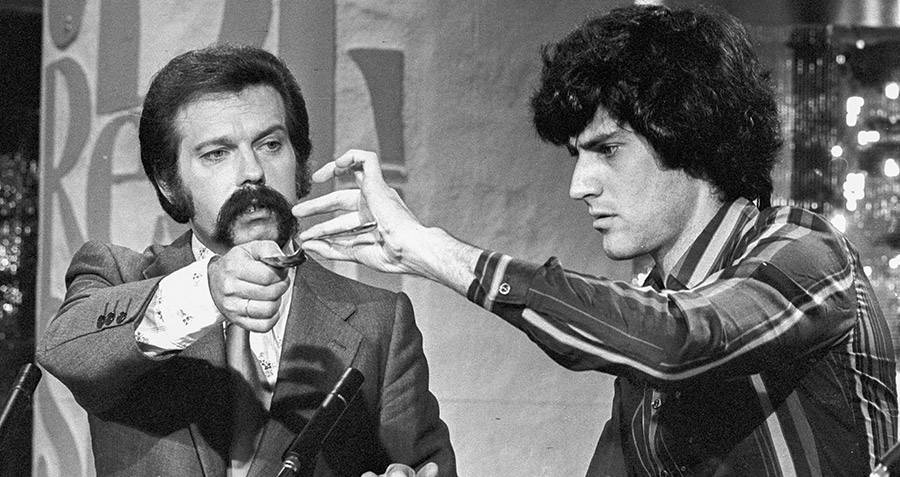
Have you ever tried bending spoons? I don't mean with your hands, I mean with your mind like Uri Geller. I know for a fact that anyone who has seen The Matrix has tried it at least once. Well that includes the CIA too. Their experiments ran from 1978-1995 as part of a program called Stargate which aimed to recruit and interview "Psychoenergetic" individuals for testing the practical applications of psychic powers. They define this in their official dossier on the subject as “A mental process by which an individual perceives, communicates with, and/or perturbs characteristics of a designated target, person, or event which is remote in space and/or time from that individual”(General Dossier 1). Their project hoped to discover the secrets to "Remote Viewing" a technique which hoped to have operatives access their psychic powers in order to predict events that were beyond their sensory perception. The sorts of tests they performed can be found in the official CIA documents I have included in my works cited. You can find the testing protocols for recruiting new psychic agents (Project N1-X) where operatives were asked to locate a hidden document without leaving the room, and you can view the intelligence report of an actual event analysis (Project 8122) where operatives were asked to locate a crate of explosives stolen from a bunker which includes detailed sketches of the psychic's description of the getaway car and the building where the explosives were stored in the interview notes. It's far too easy to give the CIA a hard time for recruiting psychics to teach them mind control powers (we've all done it), but in the end Project Stargate did have a twisted sort of logic to it: "the benefits include the fact that it is 'passive', 'inexpensive' and that there is 'no known defense'"(Griffin 2).
 |
| https://allthatsinteresting.com/remote-viewing-project-stargate |
3- Doctor Zhivago or: How I Learned to Stop Worrying and Love Copyright Infringement
In 1958, the CIA discovered a book called Doctor Zhivago by Russian author Boris Pasternak and instantly fell in love. The book was the perfect propaganda tool, "Pasternak’s humanistic message — that every person is entitled to a private life and deserves respect as a human being, irrespective of the extent of his political loyalty or contribution to the state — poses a fundamental challenge to the Soviet ethic of sacrifice of the individual to the Communist system" (Finn 1). The USSR banned Doctor Zhivago before it had the chance to be printed, but foreign editions managed to make it to the presses. The CIA managed to snag an early transcript and paid for a small print run of the novel by the Hague so that they could pass out the novel at the 1958 world fair. Since they couldn't pass out the novel at the US booth at the fair, they teamed up with the Vatican, who agreed to pass out the books to Russians that prayed in the small chapel at their pavilion. There was only one small problem: all of this was completely illegal by accident: "The CIA had anticipated that the Dutch publisher would sign a contract with Feltrinelli, Pasternak’s Milan publisher, and that the books handed out in Brussels would be seen as part of that print run. The contract was never signed, and the Russian-language edition printed in The Hague was illegal. The Italian publisher, who held the rights to “Doctor Zhivago,” was furious when he learned about the distribution of the novel in Brussels. The furor sparked press interest and rumors, never confirmed, of involvement by the CIA." (Finn 5) After their involvement was discovered, the CIA saw how furious the covert distribution of the novel made the Kremlin and immediately ramped up their efforts to distribute the novel. They dove headfirst into the business of copyright infringement and opened up a printing press at CIA headquarters, preparing for the 1959 World Festival of Youth and Students for Peace and Friendship in Vienna by mass producing classic anti-communist literature: "There was a significant effort to distribute books in Vienna — about 30,000 in 14 languages, including 1984, Animal Farm, The God That Failed and Doctor Zhivago" (Finn 5). No contracts were negotiated, but at least the CIA's efforts got Pasternak the literary attention he deserved, later winning him the Nobel Prize for literature.
 |
| https://www.pinterest.com/pin/95771929547232848/ |
Don't get me wrong, I love the CIA. They have done more for this country then we can ever even begin to know or understand (mostly because they'll never give us the chance to know but I guess that counts for something). The CIA’s ultimate mission is to fight to save democracy every day without anyone knowing or ever asking for recognition. If anything, this article only demonstrates the CIA’s commitment to keeping us safe, no matter the cost, even if that means blowing up a dictator with a seashell every so often to protect our freedoms. By doing so, they protect your God-given right to get up from your desk right now and fly to Atlanta, Georgia so that you can attempt to finish an 11-pound pizza for a chance at a $250 cash prize. If that isn't freedom, then I certainly don't know what is.
Works Cited
"Fidel Castro: Dodging Exploding Seashells, Poison Pens and Ex-lovers." BBC News. BBC, 27 Nov. 2016. Web. 30 Sept. 2019. <https://www.bbc.com/news/world-latin-america-38121583>.
Finn, Peter, and Petra Couvée. "During Cold War, CIA Used 'Doctor Zhivago' as a Tool to Undermine Soviet Union." The Washington Post. WP Company, 05 Apr. 2014. Web. 30 Sept. 2019.
Griffin, Andrew. "CIA Releases Classified Documents on Psychic Control Plans." The Independent. Independent Digital News and Media, 18 Jan. 2017. Web. 30 Sept. 2019.
History.com Editors. “Bay of Pigs Invasion.” History.com, A&E Television Networks, 27 Oct. 2009, www.history.com/topics/cold-war/bay-of-pigs-invasion.
Lubben, Alex. "The 6 Craziest CIA Plots to Kill Fidel Castro." Vice. N.p., 27 Oct. 2017. Web. 30 Sept. 2019.
"Project Stargate General Dossier." Freedom of Information Act Electronic Reading Room. Central Intelligence Agency, 8 Aug. 2000. Web. 30 Sept. 2019. <https://www.cia.gov/library/readingroom/docs/CIA-RDP96-00789R003300210001-2.pdf>.
"Project Stargate-(Project 8122)." Freedom of Information Act Electronic Reading Room. Central Intelligence Agency, 17 Jan. 2003. Web. 30 Sept. 2019. <https://www.cia.gov/library/readingroom/docs/CIA-RDP96-00788R000600970009-2.pdf>.
"Project Stargate-(Project N1-X)." Freedom of Information Act Electronic Reading Room. Central Intelligence Agency, 17 Jan. 2003. Web. 30 Sept. 2019. <https://www.cia.gov/library/readingroom/docs/CIA-RDP96-00789R003700710001-3.pdf>.
“The Cuban Missile Crisis, October 1962 .” Milestones: 1961–1968, U.S. Department of State Office of the Historian, history.state.gov/milestones/1961-1968/cuban-missile-crisis. <https://history.state.gov/milestones/1961-1968/cuban-missile-crisis>.
Subscribe to:
Posts (Atom)